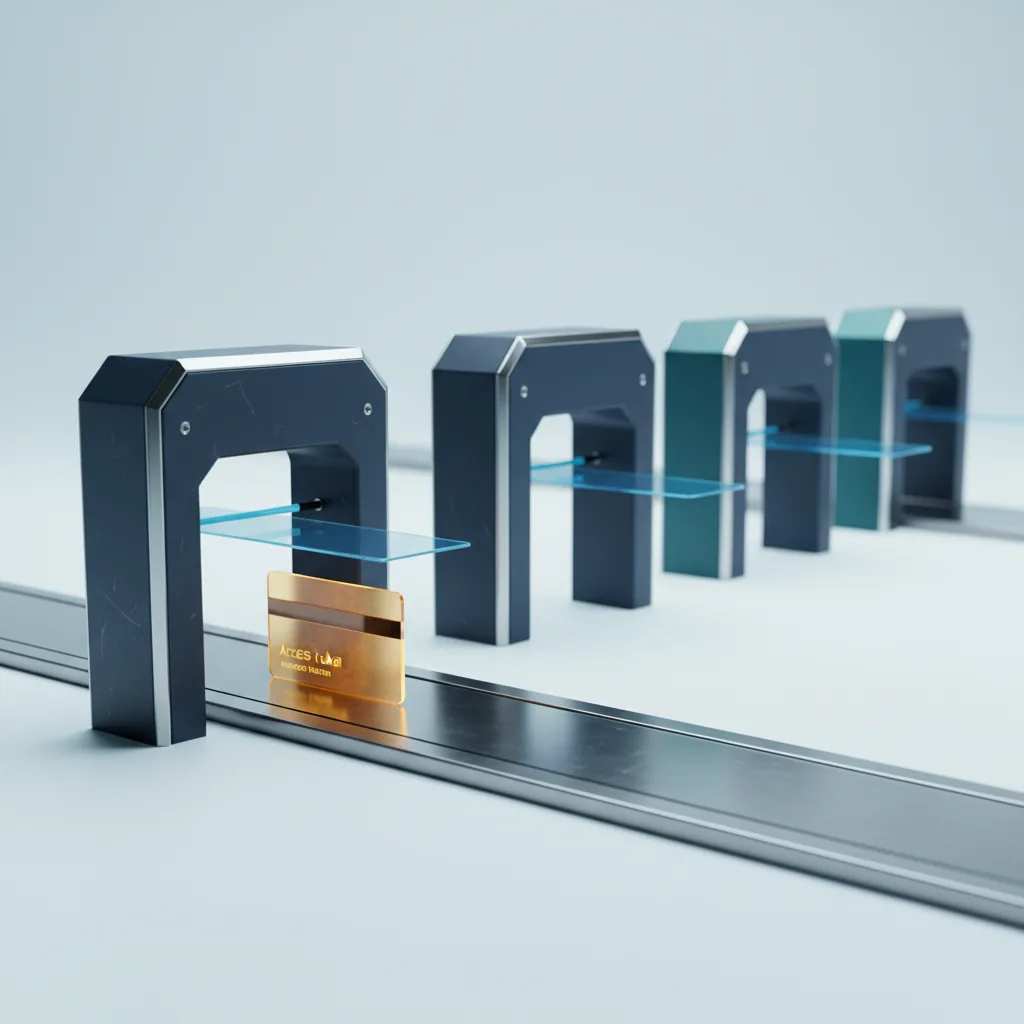
Most Zero Trust advice is written for Fortune 500 companies with two-hundred-person security teams and unlimited budgets. The German Mittelstand has neither. What it does have is NIS2 pressure, a supply chain that increasingly demands documented controls, and IT teams who have spent twenty years running on-premise networks that mostly worked. They do not need a vision deck. They need a sequence they can start on Monday.
This is the plan I would run for a German SME today: three phases, thirty days each. No vendor pitches, no boil-the-ocean rebuild. The goal is a defensible, audit-ready posture in ninety days, and a foundation that does not collapse the day your IT lead retires.
Why does Zero Trust Mittelstand matter now?
Three pressures are converging on the German Mittelstand at once, pushing every IT team toward Zero Trust thinking whether they recognise it or not:
- NIS2 transposition. Germany’s NIS2 implementation, BSI-Gesetz, brings tens of thousands of Mittelstand companies into scope that were previously below the regulatory line. The deadlines for evidence are real.
- Supply chain demands. Larger customers, the OEMs, the Tier-1s, are pushing security questionnaires down to suppliers. “Zero Trust roadmap” is now a line item on those questionnaires.
- The threat shift. Ransomware is no longer the only concern. Initial-access brokers buy and sell credentials to Mittelstand companies precisely because the security posture is uneven.
Zero Trust is not the point. Making each of those three problems materially harder is. (For more, see why the German Mittelstand is dangerously unprepared for NIS2.)
What does Zero Trust Mittelstand actually mean?
Strip the marketing and Zero Trust has three load-bearing principles. They apply identically in a Mittelstand context and in the enterprise:
- No implicit trust based on network location. Being on the corporate VPN is not authentication.
- Least privilege, scoped by identity and context. Every request authenticated, every connection authorised, every action logged.
- Continuous verification. Trust is re-evaluated on every request, not granted once at session start.
That is it. Everything else, microsegmentation, software-defined perimeter, conditional access, secure web gateways, is implementation detail. Deliver on those three principles and you are defensible regardless of which vendor you pick.
The Zero Trust Mittelstand 90-day plan
Three phases, each with a measurable outcome. Each can be paused if budget or business priorities shift, without leaving the company worse off than when you started. This is the sequencing I have used across multiple ISO 27001 implementations and SME advisory engagements.
Days 1-30: Identity foundation for Zero Trust Mittelstand
The biggest gains come from identity. If you do nothing else from this plan, do this phase. Identity is where the cheapest mitigation meets the largest reduction in blast radius.
- Week 1, Inventory and baseline. Identify every identity source: Active Directory, Microsoft Entra ID, local accounts, service accounts, vendor-provisioned access, shared credentials in password vaults. Document every privileged account.
- Week 2, MFA everywhere it matters. Phishing-resistant MFA on every privileged account, no exceptions. FIDO2 hardware keys or Windows Hello for Business preferred. SMS as backstop only.
- Week 3, Conditional access. Block legacy authentication protocols. Require compliant devices for privileged access. Geofence where it makes business sense.
- Week 4, Privileged access workflows. Move from standing administrative privilege to just-in-time access. Approval-required for production changes.
By day 30 you have closed the most common attack path, credential theft leading to domain takeover, across the majority of your attack surface.
Days 31-60: Network segmentation in a Zero Trust Mittelstand context
The second highest-leverage phase. The goal is not to microsegment everything. It is to make the blast radius of any single compromise small enough to contain.
- Week 5, Map the network. Where are the crown jewels? ERP, customer database, CAD repository, financial systems, OT environments. List them.
- Week 6, Default-deny at trust boundaries. Identify the highest-value trust boundaries: production OT to corporate IT, finance to general LAN, third-party vendor connections. Move those boundaries to default-deny.
- Week 7, East-West visibility. Without visibility, segmentation is theatre. Deploy structured flow logging into your SIEM.
- Week 8, VPN replacement (where appropriate). An application proxy, Cloudflare Access, Microsoft Entra Application Proxy, Twingate, is now usually a better answer than a VPN.
By day 60, an attacker who lands on one workstation has dramatically less reach than they did on day 31.
Days 61-90: Continuous verification and Zero Trust Mittelstand measurement
The final phase. Zero Trust is not a project, it is a posture. Days 61-90 make that posture observable and reportable.
- Week 9, Logging and SIEM hygiene. Identity logs, network flow logs, endpoint logs, application logs, all into a central SIEM. 90 days hot, 12 months cold for NIS2 alignment.
- Week 10, Anomaly detection on identity. UEBA on your identity provider. Impossible-travel alerts, atypical sign-ins, privileged-account anomalies.
- Week 11, Incident response runbooks. Document the response for the most likely scenarios. Run a tabletop exercise on at least one scenario.
- Week 12, Board-level reporting. A one-page monthly metric pack: identity health, network posture, incident readiness.
By day 90 you have an evidenced, repeatable security posture. The NIS2 audit becomes a documentation exercise rather than a fire drill. (For the wider compliance lens, see 17 Years of Enterprise Security Compliance.)
What to avoid in a Zero Trust Mittelstand rollout
A few things I see Mittelstand teams trip on, repeatedly:
- Buying Zero Trust as a SKU. No vendor sells “Zero Trust.” They sell components, identity, segmentation, monitoring. The architecture is yours to build.
- Trying to do everything at once. A half-implemented posture that ships beats a fully-planned one that never does.
- Treating it as a security project. Zero Trust touches every team. Bring HR, procurement, operations, and legal in on day one.
- Skipping documentation. The architecture is half the value. The other half is the artefact your auditor reads.
Data sovereignty in Zero Trust Mittelstand
For Mittelstand companies, German or EU data residency is often non-negotiable, a customer requirement, BDSG, or simply principle. Most of a defensible architecture can sit on EU-hosted infrastructure. Microsoft Entra has EU data boundary commitments. Cloudflare offers EU data localisation. Open-source SIEM stacks run wherever you want them to. For many clients, the EU-only requirement is a feature, not a constraint.
Where Zero Trust Mittelstand leaves you in 90 days
Ninety days from a standing start, a properly-scoped programme delivers: phishing-resistant authentication on critical accounts, default-deny boundaries at trust borders, structured logging with anomaly detection, documented incident runbooks, and a board-level metric pack.
That is not maximalist Zero Trust. It is enough to materially reduce the most common attack paths, satisfy NIS2 documentation requirements, answer supplier questionnaires honestly, and survive your IT team turning over.
For a Mittelstand company, that is what defensible looks like in 2026.
If you are scoping a Zero Trust programme and need pragmatic input grounded in real implementations and 17+ years of enterprise cybersecurity, request a review.